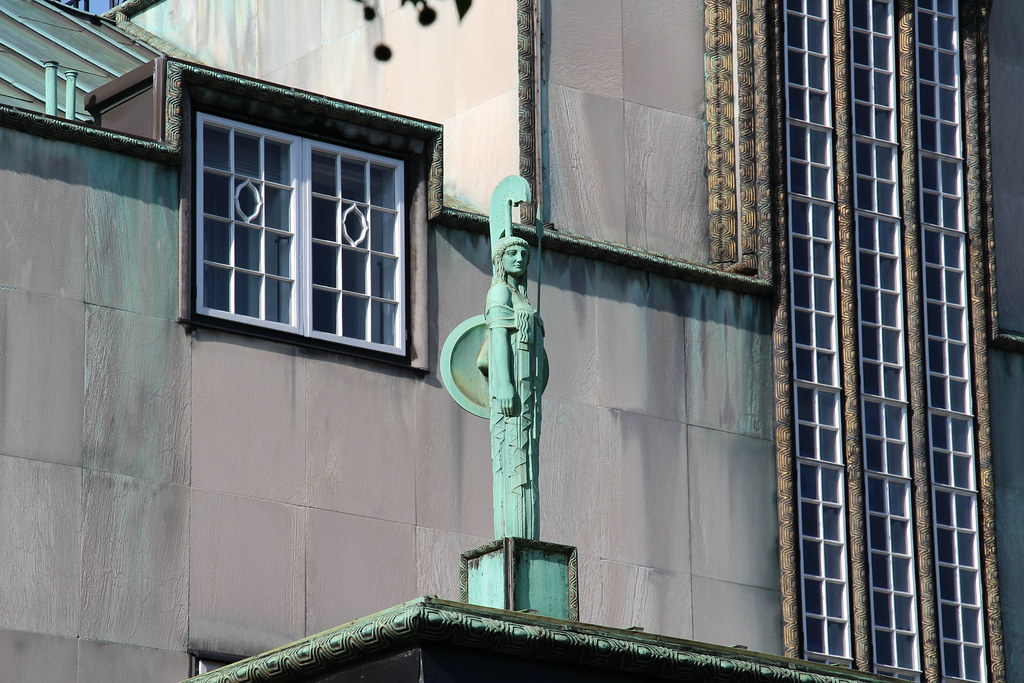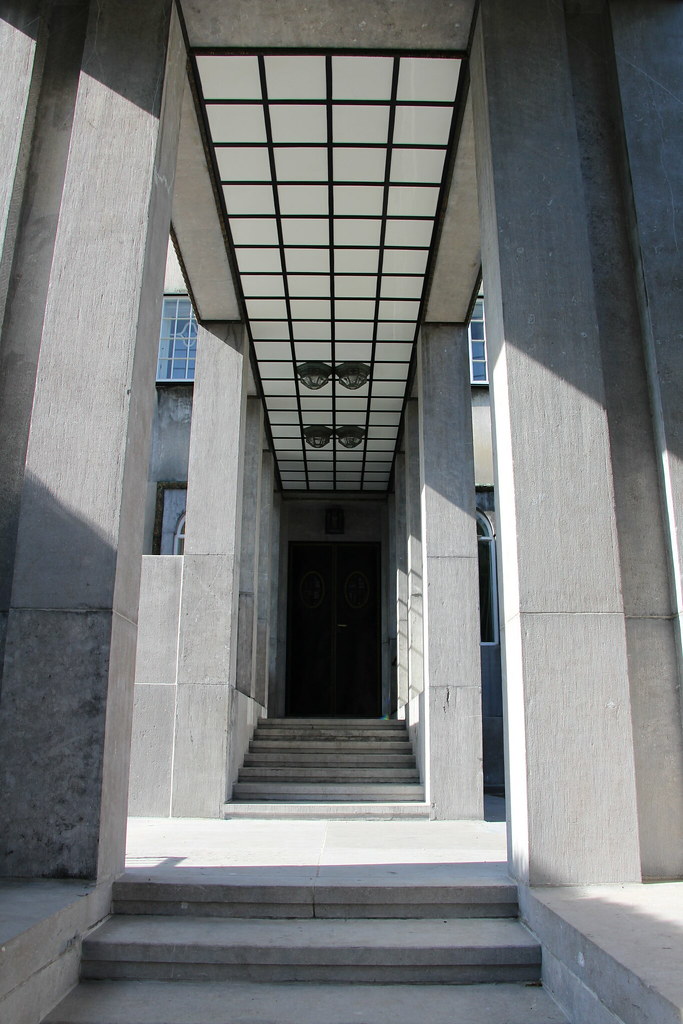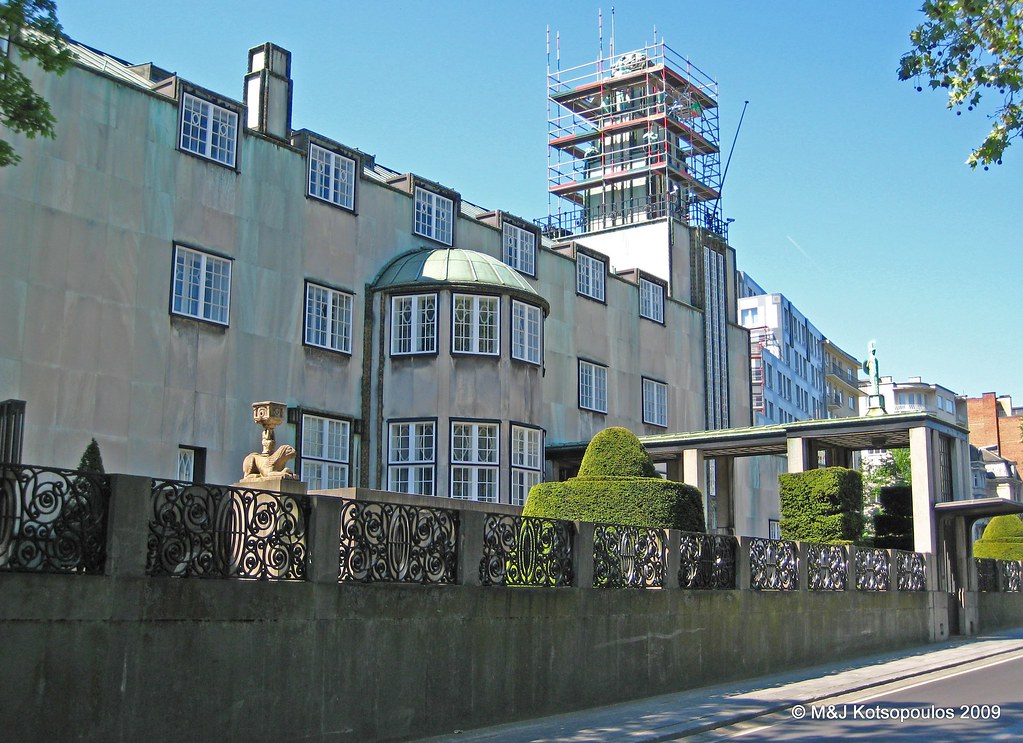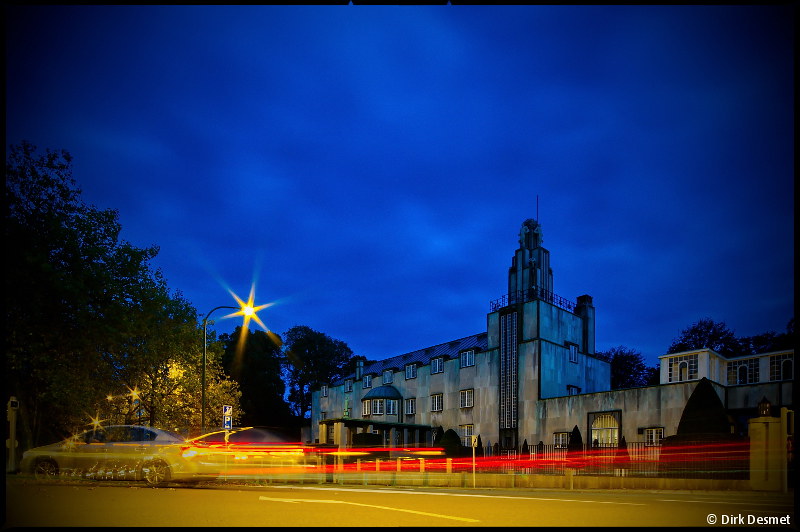
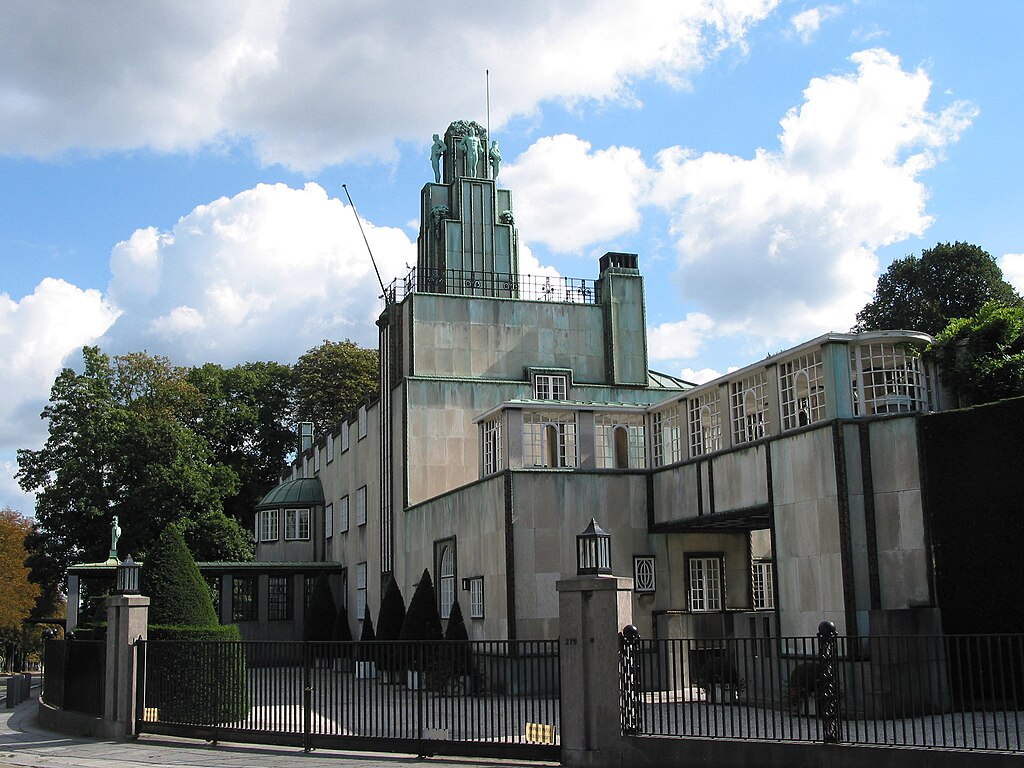
At first glance, Stoclet Palace looks less like a family residence than a manifesto carved in pale marble on a busy Brussels avenue. The tall, cubical tower, the stripped surfaces of Carrara stone and the strict verticals in bronze make the house appear almost aloof from its suburban surroundings. Yet behind this reserved facade lies one of the most ambitious private commissions of the early twentieth century, a place where architecture, interior design, furniture, garden and even children toys were conceived as one coherent work of art.
Commissioned by Belgian financier Adolphe Stoclet, the palace was designed by Austrian architect Josef Hoffmann, a central figure of the Vienna Secession and co founder of the Wiener Werkstätte. Work started after 1905, and by 1911 the house in the then expanding eastern suburbs of Brussels was largely complete. Hoffmann received what designers rarely obtain: complete creative freedom and an almost unlimited budget. The result was a radical departure from the swirling, plant like forms that defined much continental Art Nouveau. Here, geometry prevails, with a composition of crisp volumes and a clear vertical emphasis that anticipates the coming language of Art Deco.
A total work of art in marble, metal and mosaic
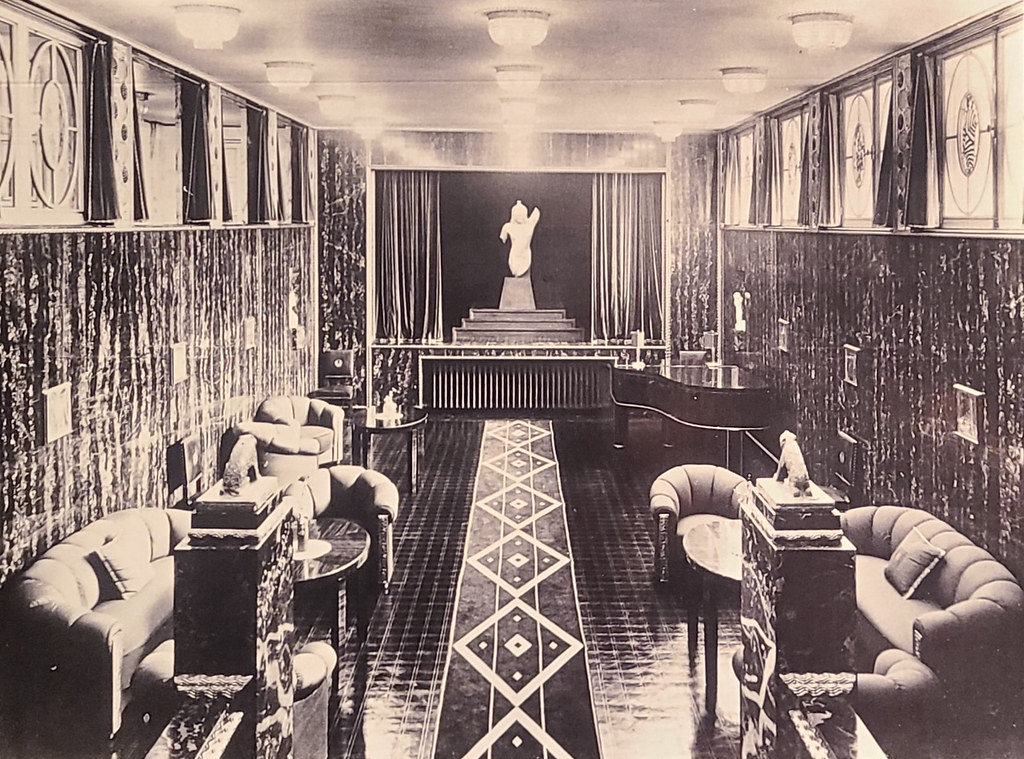
Hoffmann treated Stoclet Palace as a true Gesamtkunstwerk, a total work of art that integrated every visible element, from the main staircase to the door handles. Through the Wiener Werkstätte, he coordinated teams of artisans who produced custom furniture, light fittings, wall coverings, silverware and even the book in which the family recorded their guests. Rare marbles, precious woods and fine leathers were specified with the same care as the structural bones of the house, turning daily life for the Stoclet family into a carefully staged aesthetic experience.
The most celebrated interiors are the dining room and the music room. For the former, Hoffmann invited Gustav Klimt, whose shimmering paintings had shocked and delighted Viennese audiences only a few years earlier. Klimt designed a cycle of mosaics known as the Stoclet Frieze, executed in marble, glass and semi precious stones by Leopold Forstner. Stylised trees, geometric spirals and iconic figures such as The Expectation and The Fulfilment move across the walls in a continuous band of gold and colour, turning dinner into a performance beneath a modern, mythic narrative. Today the preparatory drawings are preserved in the Museum of Applied Arts in Vienna, while the mosaics remain in situ in Brussels.
Between the avenue and the garden
Despite its artistic ambition, the house has long been the subject of local rumours and misreadings. A popular Brussels story claims that the palace literally turns its back on Tervuren Avenue in protest against King Leopold II, promoter of the grand urban axis linking the city to his royal domain. The street facade, with its tall tower and minimal ornament, certainly has an austere presence that perplexed neighbours used to carved stone balconies and decorative ironwork. Whether hostility to the monarch really motivated the orientation or not, historians note that no firm documentary proof supports either version of the story.
From the garden side, the building reveals a different character. Here Hoffmann extended the geometric language into terraces and projecting bays that open toward a carefully composed landscape. The garden, also designed by him, continues the interplay of architecture and nature in straight paths, clipped hedges, pergolas and reflecting basins. Vases, planters and outdoor furniture were conceived as part of the same family of forms, underscoring the idea that the palace could only be fully understood as a single artistic organism, not a shell to be furnished at will.
Legal battles, world heritage and a closed door
In 1976, Belgium classified Stoclet Palace as a historic monument, recognising its exceptional state of preservation and its significance in the international story of modern architecture. Yet the protection applied primarily to the building shell. The treasures that filled it, from Klimt mosaics to dining services and bathroom fittings, legally remained ordinary family property. In the early twenty first century, as the last resident, Anny Stoclet, passed away and inheritance questions multiplied, the Brussels regional authorities sought to extend the classification to the interior ensemble as well. The contents were valued at tens of millions of euros, and potential sales abroad became a real concern for curators and officials.
The move triggered a long legal dispute between heirs and the public authorities. While the region argued that Hoffmann had designed house and contents as one inseparable composition, the owners insisted on their right to dispose of furniture and artworks as they saw fit. Austria, where Hoffmann and Klimt are national cultural icons, even explored the possibility of acquiring the interior as a whole, but no purchase materialised. In 2013, Belgium highest court finally upheld the comprehensive classification, after an exhaustive inventory that listed 277 categories of objects, from furniture and light fittings to silver, crockery and garden seats. The case set a precedent in the country for the protection of modern heritage in its entirety.
UNESCO added Stoclet Palace to the World Heritage List in 2009, recognising not only its architectural innovation but also the way it crystalised the ambitions of early modern design at the scale of a private home. The inscription emphasised the quality of the collaboration between architect, visual artists and artisans, as well as the building influence on later European domestic architecture. Yet unlike many world heritage sites, this one remains firmly closed to the public. The palace is still owned by the Stoclet family heirs, and only a tiny number of researchers and official guests have been able to visit the interiors in recent decades.
A hidden icon in a changing city
The tension between international fame and everyday invisibility shapes contemporary debates around the building. For Brussels residents, Stoclet Palace is at once a familiar sight and an inaccessible mystery, its garden walls and guarded gate marking a clear boundary between street life and an elite cultural treasure. Journalists regularly question whether a monument of such importance should remain so private when public funds help protect and promote it as a national asset.
In recent years, the area around Tervuren Avenue has continued to evolve, and new gestures have appeared in dialogue with the palace. In April 2024, a monumental textile based artwork by artist Stephan Goldrajch, created together with local children, was installed near the property. The sculpture pays homage to Emilie Louise Flöge, Viennese fashion designer and businesswoman, companion of Gustav Klimt and a key figure in the same avant garde circles that shaped the palace interiors. In its soft, woven surfaces, observers detect an echo of the refined textiles once produced by the Wiener Werkstätte and used inside the house.
Seen from the tram that glides along Tervuren Avenue today, Stoclet Palace still gives little away. Its marble planes remain resolutely mute, its Klimt mosaics glimmer unseen behind closed curtains. Yet the building continues to exert a powerful pull on architects, historians and curious passers by who read about it but cannot enter. More than a century after Adolphe Stoclet asked Josef Hoffmann to design an uncompromising home for his family, the palace stands as a rare surviving example of early modern luxury, a frozen moment when avant garde ideals met financial power and produced a total work of art that the city can admire only from the outside.