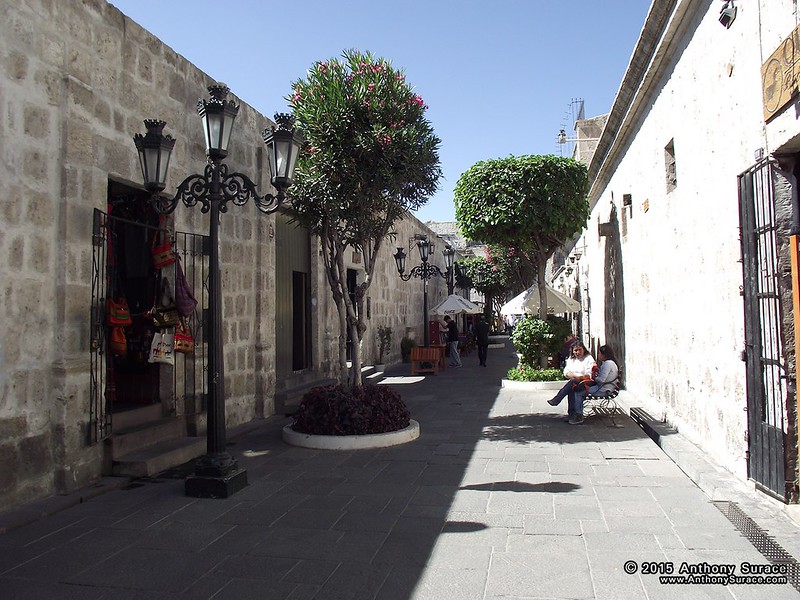
The Historic Centre of Arequipa, declared a UNESCO World Heritage Site in 2000, is one of the most dazzling examples of colonial urban design in South America. Known as the “White City” for its radiant buildings carved from sillar, a white volcanic stone, Arequipa’s core combines indigenous and European influences into an architectural harmony that has resisted centuries of earthquakes, eruptions, and time.
Origins and Urban Layout
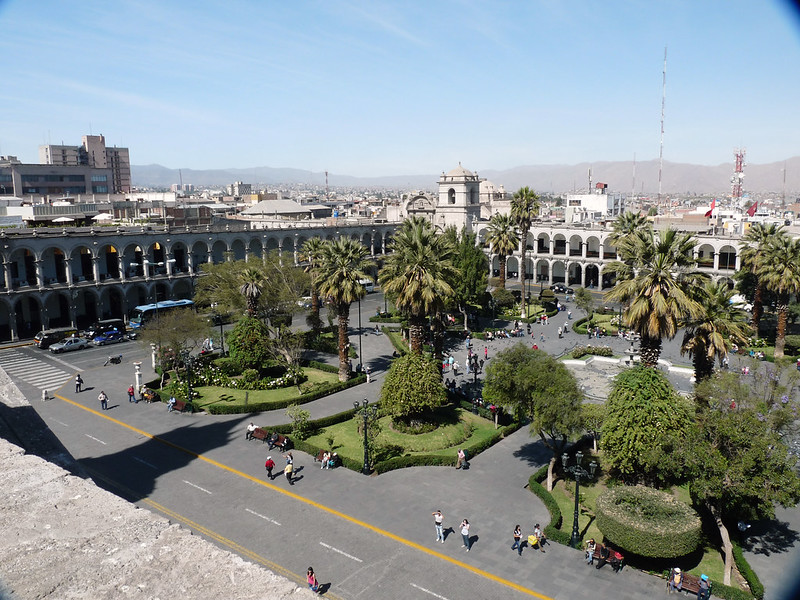
Founded on August 15, 1540, by Garcí Manuel de Carbajal under orders from the Spanish crown, Arequipa’s historic center was laid out in an almost perfect grid of forty-nine blocks—each measuring about 111 meters per side, separated by streets just over ten meters wide. This geometric precision is one of the city’s defining features and remains largely intact today.
The core covers 332 hectares and includes 5,817 individual properties, of which 500 are officially recognized as cultural heritage buildings. Most of these structures were rebuilt in the 19th century after the devastating 1868 earthquake, often on the same foundations as the original colonial buildings.
Architecture in Sillar
What makes Arequipa truly unique is its use of sillar, a porous white volcanic stone quarried from the nearby Chachani and Misti volcanoes. Lightweight, resistant, and thermally efficient, sillar not only provides an elegant aesthetic but also offers natural earthquake resistance. The stone’s texture and brightness give the city a luminous appearance, especially under the high Andean sun.
Houses and churches were built with thick walls—up to 1.5 meters for homes and more than 2 meters for temples. Arched porticoes, vaulted ceilings, and large courtyards define the city’s architectural character. The cal-lime mortar used between stones creates a seamless surface, giving façades a sculpted, almost monolithic look. Decorative carvings in relief, floral motifs, angels, and mythological figures lend the buildings a baroque exuberance unique to Arequipa.
Religious Monuments
Among the city’s hundreds of monuments, religious architecture dominates. The Cathedral of Arequipa, occupying an entire side of the Plaza de Armas, is the largest neoclassical church in Peru. Built in the mid-19th century over the ruins of its baroque predecessor, it combines solemnity and grandeur, with twin towers that have become symbols of the city’s skyline.
Nearby stands the Church and Cloisters of the Compañía de Jesús, considered the most outstanding example of mestizo baroque—a fusion of Spanish and indigenous iconography. Built in the late 16th and 17th centuries, its façade is a masterpiece of stone lacework, and the chapels within display colorful Cusqueña School paintings.
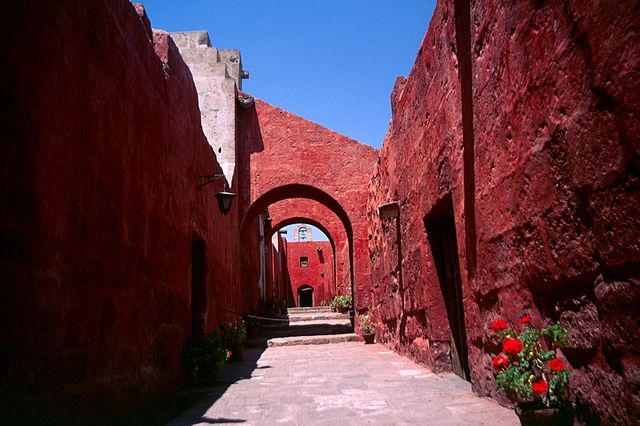
Other religious landmarks include the Monastery of Santa Catalina, a vast convent-city covering over 20,000 square meters. Founded in 1579, it remained closed to the outside world for centuries. Today, its vividly painted walls, narrow cobbled lanes, and peaceful courtyards form one of the most visited attractions in southern Peru. Each sector reflects centuries of adaptation—from colonial austerity to 18th-century baroque expansion.
The Convent of Santo Domingo, San Francisco complex, La Merced, Santa Teresa, and Santa Rosa also bear testimony to Arequipa’s spiritual and artistic legacy, representing an evolution from early colonial simplicity to ornate late-baroque expression.
Civil and Domestic Architecture
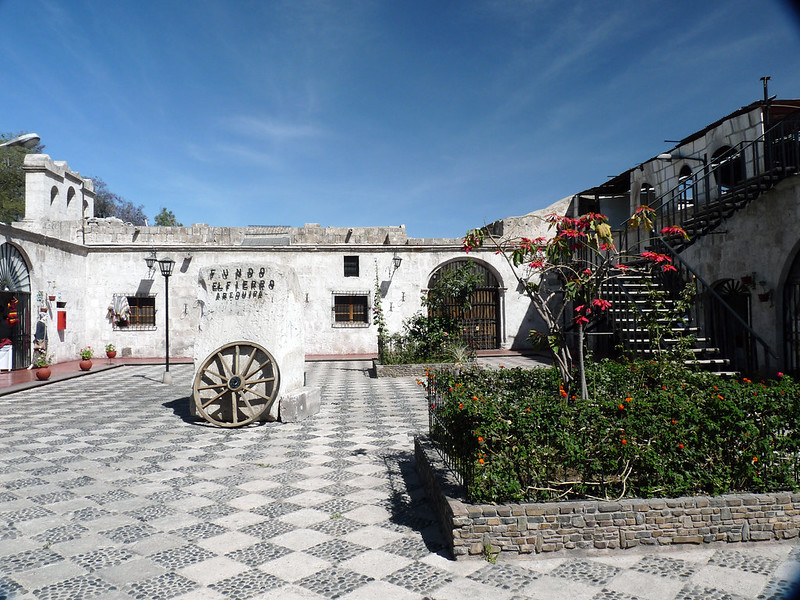
Beyond churches and convents, Arequipa boasts an exceptional collection of noble mansions that reveal the city’s aristocratic past. These include the Casa del Moral, with its elegant stone façade and carved lintels; the Casa Tristán del Pozo, an exquisite model of 18th-century domestic architecture; and the Palacio de Goyeneche, blending baroque ornamentation with neoclassical restraint. Each of these mansions opens onto spacious patios adorned with fountains and surrounded by colonnaded corridors that soften the transition between interior and exterior space.
The residential buildings follow a consistent pattern: thick sillar walls, semicircular arches, vaulted ceilings, and modest yet refined ornamentation. The balance of light and shadow on the carved surfaces gives the heavy stone an unexpected grace. Even doorways and windows, framed by pilasters and crowned with frontons, express the artistic language of Arequipa’s builders.
Bridges and Urban Harmony
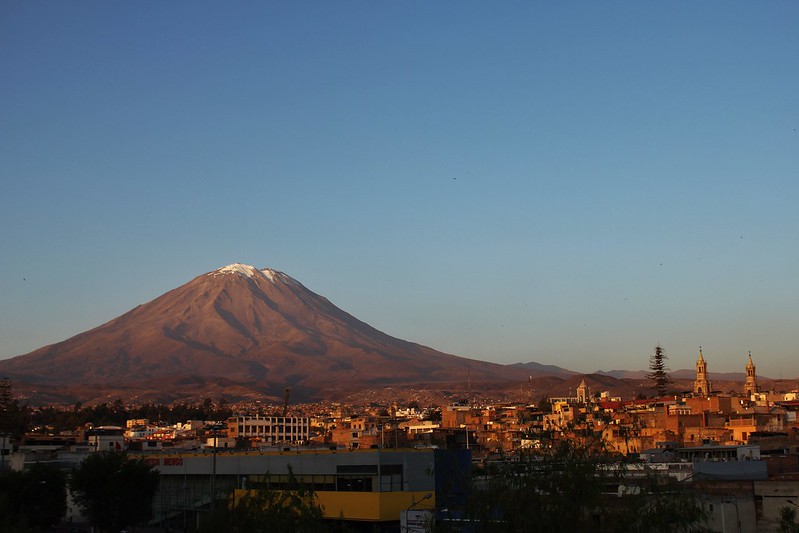
The city’s bridges, such as the Bolognesi Bridge and Grau Bridge, both built in the 18th century, extend the sillar aesthetic into Arequipa’s infrastructure. They symbolize the connection between the urban fabric and the surrounding natural landscape dominated by the volcanoes Misti, Chachani, and Pichu Pichu. The uniform use of sillar across religious, civil, and public buildings ensures a cohesive visual identity and a deep sense of place.
Urban harmony is one of Arequipa’s great triumphs. Despite centuries of reconstruction, the relationship between its architecture, plazas, and light has remained consistent. The narrow streets open unexpectedly to bright courtyards, while the façades reflect sunlight in warm tones, creating an interplay that defines the city’s nickname: La Ciudad Blanca—The White City.
The Role of Sillar Through Time
The volcanic origin of sillar has long influenced Arequipa’s culture. Pre-Inca peoples already used this stone to carve petroglyphs and ceremonial structures. When Spanish settlers introduced European architectural forms, local artisans adapted them to local materials, creating a hybrid style that was both resistant and beautiful.
After major earthquakes, especially the one in 1582, Arequipa rebuilt itself around the idea of resilience through sillar. This legacy continues today: modern architects in Arequipa still incorporate the stone into contemporary buildings as a tribute to tradition and sustainability.
Visiting the Historic Centre
Visitors to Arequipa’s historic heart are rewarded with a walk through living history. Begin at the Plaza de Armas, surrounded by colonial arcades and overlooked by the Cathedral. From there, stroll along the Calle Mercaderes to admire restored façades and cozy cafés. A few blocks away, the San Lázaro neighborhood, considered the city’s oldest, offers narrow alleys, whitewashed walls, and the feeling of stepping back in time.
Museums such as the Museo Santuarios Andinos, home to the famous mummy “Juanita,” complement the architectural experience with insights into pre-Hispanic culture. And of course, no visit is complete without tasting local specialties like rocoto relleno, adobo arequipeño, and the refreshing queso helado.
A Living Heritage
Arequipa’s historic centre is not a frozen relic but a vibrant urban landscape where daily life unfolds among centuries-old walls. The preservation of its sillar buildings is both an artistic and a social achievement—an ongoing dialogue between the past and the present. The recognition by UNESCO not only safeguards the physical beauty of the city but also celebrates the craftsmanship, resilience, and identity of its people.
Walking through Arequipa is to witness how stone, light, and history have converged to form one of the most beautiful cities in Latin America—a masterpiece carved in white beneath the shadow of volcanoes.